



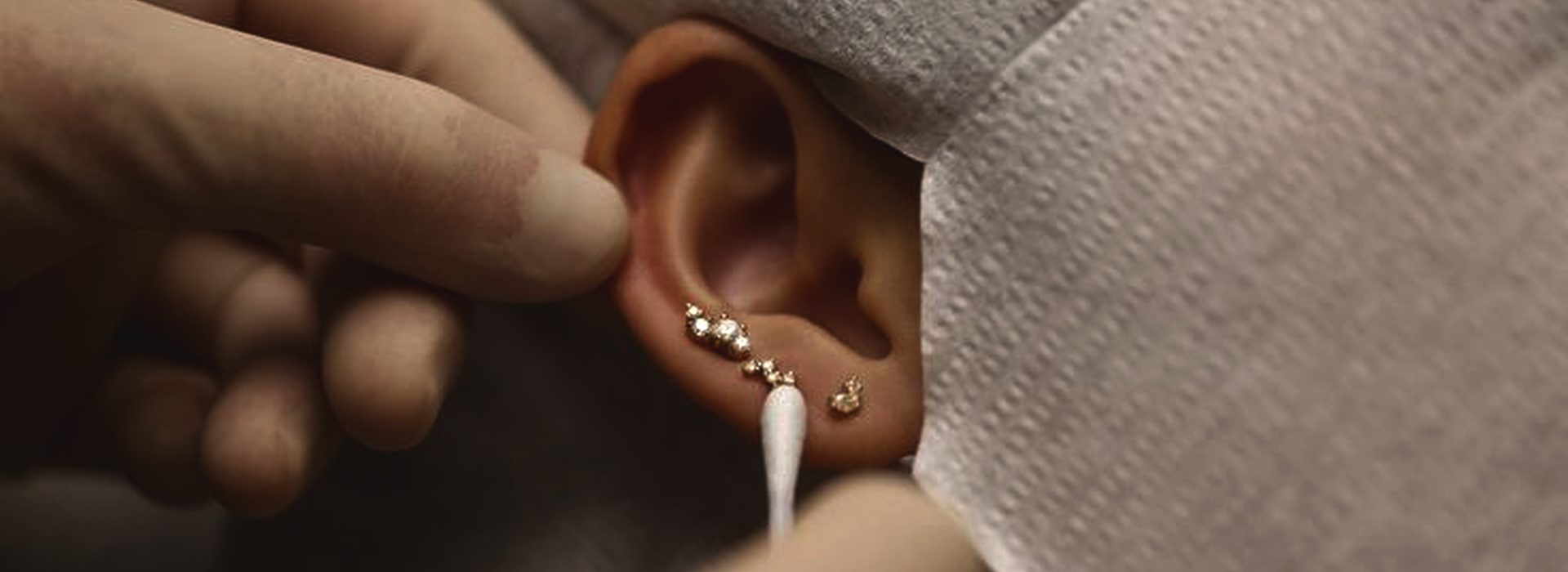
Piercing aftercare: why it matters and what you should know.
Piercing aftercare is essential, whether the site is fresh or already healed. A piercing is a procedure on the body – even a small one is still an open wound that needs time and the right conditions to heal. Proper care of a new piercing greatly reduces the risk of infection, irritation or even lasting tissue damage. With a healed piercing, it helps keep the channel clean, healthy and free of complications such as closing up or inflammation while you wear jewelry. Many people underestimate everyday hygiene, yet neglected care is the most common cause of problems. With the right approach, a piercing can stay beautiful, functional and pain-free for many years.
A new piercing – what you may notice:
After a piercing it is completely normal for the body to respond with mild inflammation – it is, after all, a controlled injury to the skin. In the first few days (or weeks, depending on the site) you may see the following signs, which are a normal part of healing:
-
Redness around the piercing
-
Swelling and mild soreness, or tenderness to pressure
-
Slight warmth at the piercing site
-
A clear or yellowish discharge (plasma, lymph – it can dry into crusts)
-
A feeling of “tightness” around the piercing, especially when you move (for example at the ear or navel)
These symptoms usually fade within a few days to a few weeks. It is important to watch that they do not get worse – if the redness increases, the pain is strong, or you notice pus, a smell or a fever, it may be an infection.
Healing time by piercing type (approximate):
| Piercing type | Healing time |
|---|---|
| Earlobe | 6–8 weeks |
| Cartilage (helix, tragus) | 3–6 months |
| Nostril | 2–4 months |
| Septum | 6–8 weeks |
| Lip / labret | 6–8 weeks |
| Tongue | 2–4 weeks |
| Navel | 6 months – 1 year |
| Nipples / genitals | 3–12 months |
⚠️ Important: Healing is not only the time until the piercing “stops hurting” – the tissue also heals beneath the surface. Even if a piercing looks healthy, it can still be vulnerable inside.
Basic rules for caring for a new piercing:
The right care in the first weeks and months is essential for trouble-free healing. Here are the main rules to follow:
✅ 1. Clean hands come first
-
Never touch the piercing or the jewelry with dirty hands.
-
Wash your hands with warm water and soap before every contact with the piercing (for example when cleaning it or changing the bedding).
-
Do the same before getting dressed.
✅ 2. Clean it 1–2 times a day
-
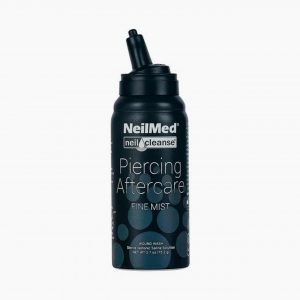
The most natural choice is saline solution (an isotonic salt solution – you can buy it at a pharmacy, or mix it at home: 1/4 teaspoon of sea salt in 250 ml of boiled water, or you can buy the proven NeilMed sterile saline solution, 75 ml directly from us – an ideal and safe option for everyday piercing care).
-
Clean with a cotton swab or gauze soaked in the solution, and gently remove crusts and dirt.
-
Do not use alcohol, peroxide, iodine, tea tree oil or antibacterial soaps unless your piercer specifically recommends them – these substances dry the tissue and disrupt healing.
✅ 3. Do not twist the jewelry
-
The myth that you must “turn it” has long been disproved. Moving the jewelry disturbs healing tissue and can carry infection inside.
-
Leave the jewelry in place – the body heals best when it is left alone.
✅ 4. Avoid irritation
-
Do not sleep on the piercing (for an ear piercing, consider sleeping on the other side).
-
Watch out for snagging on towels, hair, clothing, headphones or face masks.
-
If the piercing is in the mouth area, limit smoking, alcohol, spicy food and oral sex in the first weeks.
✅ 5. Keep up personal hygiene
-
Change towels and bedding often.
-
After a shower, gently dry the piercing with a clean paper towel (not a regular towel – it can hold bacteria).
✅ 6. Do not use cosmetics around the piercing
-
Avoid creams, makeup, perfume and hairspray around the wound.
-
Also be careful with sunscreen or self-tanning products.
✅ 7. Do not swim, and keep the piercing out of direct sun
-
Water in pools, lakes or hot tubs contains bacteria – put swimming off until the piercing is fully healed.
-
The sun can irritate a fresh wound and slow healing.
Possible complications and how to recognize them:
Even if you care for the piercing carefully, complications can sometimes appear. It is important to recognize them in time and respond correctly. Most problems can be solved if they are caught early. The best step if a problem appears is to contact your piercer, or come in for a check so it can be dealt with right away.
❗ 1. Infection
The most common complication is a bacterial infection. It shows as redness, a pus-like discharge, pain and sometimes a fever. In worse cases an infection can mean the piercing has to be removed, or even that medical treatment is needed. The greatest risks are a dirty environment, unclean hands and unsuitable products.
How to recognize it:
-
Marked redness that spreads into the surrounding area.
-
A hot, painful swelling that does not improve.
-
A pus-like discharge (green, yellow, foul-smelling).
-
Sometimes also a fever, chills or fatigue.
⚠️ 2. A bump by the piercing (granuloma, hypertrophic scar)
If the wound heals poorly or is irritated repeatedly (for example by frequent twisting of the jewelry, or pressure from clothing), scars or hypertrophic changes can form. In some cases a keloid appears – an overgrown scar that is not only unattractive, but can also be painful and hard to remove. Be careful not to confuse a granuloma with a keloid. A granuloma is a soft and temporary inflammatory lump, while a keloid is a permanent, harder scar that will not go away on its own.
How to recognize it:
-
A hard or soft bump close to the jewelry.
-
It may be red, pink or skin-colored, and often painless.
-
Do not pierce it and do not squeeze it!
⚠️ 3. Piercing rejection
The body can treat the piercing as a foreign object and gradually “push” it out of the tissue. This happens most often with surface piercings (for example the eyebrow, nape or navel). The first warning is thinning skin over the jewelry, redness and tightness. If you do not act in time, the piercing can be rejected completely, leaving a visible scar.
How to recognize it:
-
The skin over the jewelry gradually becomes thinner.
-
The jewelry starts to move closer to the surface.
-
Its position changes, or it starts to be partly “visible through the skin”.
⚠️ 4. An allergic reaction to the jewelry
Jewelry made from unsuitable materials (for example cheap alloys with nickel) can cause an allergy, showing as itching, redness, swelling and irritation. These reactions often mean the piercing has to be removed and then healed again.
How to recognize it:
-
Itching, burning, redness.
-
Marked sensitivity around the piercing.
-
Small rashes, or flaking skin around the piercing.
⚠️ 5. Trapped crust or buildup
How to recognize it:
-
Dried plasma builds up around the jewelry and irritates the skin.
-
The area feels tight, hard or irritated, even if it does not look clearly inflamed.
-
Never scratch or peel scabs off dry!
? A final piece of advice: If you are not sure what is happening with your piercing, do not rely only on photos on the internet – the best step is a consultation
with an experienced piercer, who can advise you based on the actual condition.
Caring for a healed (older) piercing
Even if a piercing looks healed and no longer hurts, that does not mean you can stop looking after it. Regular care helps prevent irritation, odor, jewelry buildup or even inflammation coming back.
✅ 1. Regular cleaning
-
Even after healing, oil, dead skin cells and sweat collect around the piercing, which can cause an unpleasant smell (“piercing cheese”) or irritation.
-
1–2 times a week, gently wash around the piercing with lukewarm water and a mild soap (ideally fragrance-free). Then rinse well and dry with a clean tissue.
✅ 2. Occasional disinfection of the jewelry
-
If you wear jewelry for a long time without changing it, it is a good idea to take it out and clean it from time to time (if the site and the jewelry allow it).
-
Clean it in warm water with soap, or disinfect it (for example in saline solution or alcohol – only outside the body).
-
Always wash your hands, and if you are not used to taking jewelry out, do not do it yourself – ask a piercer for help.
✅ 3. Watch for changes
-
Older piercings can develop a narrower hole, crusts, or even slowly “close up” if the jewelry is left out for a long time.
-
If the piercing starts to grow over, hurt, or release something, pay attention – it may be a hidden inflammation or irritation.
✅ 4. Changing jewelry
-
After full healing you can change jewelry safely, but always use clean hands and quality materials – titanium and gold.
-
Cheap fashion jewelry or poor alloys (for example those containing nickel) can cause allergies even in an old piercing.
✅ 5. Care during physical activity
-
If you play sport, the piercing can be irritated or at risk of being torn out – use protective covering, or a suitable type of jewelry.
✅ 6. A long period without wearing it
-
Some piercings (for example the tongue, lip or nipples) can close very quickly, even if they were stable before.
-
If you need to take the jewelry out temporarily (for example for surgery or an X-ray), use a bioplast retainer so the hole does not close.
? Summary: An old piercing still needs basic care. That care keeps it trouble-free for years and preserves its look without irritation or scars.
? Tip: Always choose jewelry from trusted brands or piercing studios – it should be certified and safe for long-term wear.
A piercing is not only an ornament, but also a procedure on the body that calls for a responsible approach. Whether your piercing is new or you have worn it for years, the right care is the key to a healthy and attractive result. Careful cleaning, quality jewelry and early recognition of complications help you avoid unnecessary problems, pain or permanent scars.
Do not underestimate prevention – a few minutes of care a week is better than dealing with an infection or having to remove the piercing later. And if you are unsure about anything, always ask an experienced piercer or a doctor – health always comes first.
Book a piercing with us, in the hands of professional piercers, at: https://homietattoo.cz/on-line-rezervace-homie-tattoo-piercing-studio-praha/


