



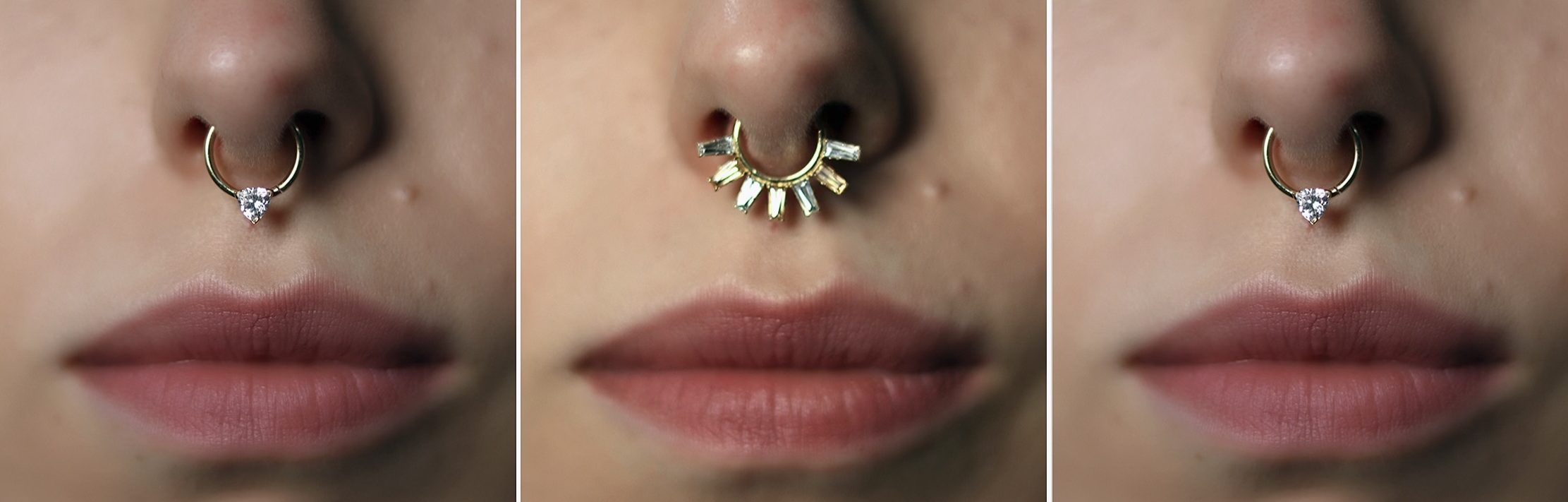
The septum piercing has become more and more popular in recent years. This striking, yet easy-to-hide piece of nose jewelry has won fans around the world – not only for its original look, but also because it can be adapted to different styles. If you are considering a septum piercing, or you already have one and want the right aftercare, you are in the right place.
In this article we look at how a septum piercing is done, how long healing takes, which jewelry is most suitable, what to avoid during aftercare and how to prevent complications. You will see that the right hygiene and patience are the key to trouble-free healing and to wearing this popular piercing for a long time. We also add advice from professionals and practical tips from real studio work.
Whether you are a complete beginner or you already have piercing experience, this complete guide to the septum piercing gives you all the important information you need.
What is a septum piercing?
A septum piercing is a body piercing placed in the soft tissue between the nostrils – more precisely in the area called the septum, the nasal wall that separates the left and right nasal cavities. Contrary to a common misconception, this piercing is not done through the cartilage, but through a thin layer of soft tissue just beneath it. This spot is sometimes called the “sweet spot” – the ideal area to pierce, because it is less sensitive and heals better.
The septum is one of the few piercings that can be hidden completely – for example with a retainer, a discreet piece that is simply flipped up inside the nose. That flexibility is one reason the septum is popular with people who want to combine a rebellious look with privacy – the jewelry is visible only when they want it to be.
✅ A curiosity: It was often a symbol of adulthood, a warrior spirit or social status.
How is a septum piercing done?
You have decided on a septum piercing and now you want to know exactly what to expect during the procedure itself. There is nothing to fear – if you choose an experienced professional and a hygienic setting, the whole process is quick, safe and surprisingly tolerable.
✅ 1. Consultation before the piercing
The piercer will go through:
-
Your health (for example allergies, illnesses, medication you take)
-
The placement and anatomy of the nasal septum – not everyone has a so-called “sweet spot” that is easy to reach
-
The type of jewelry and the material (most often titanium or gold)
-
Possible reactions, complications and the aftercare that follows
✅ 2. The piercing itself
-
Cleaning the area – the nasal septum is cleaned with an antiseptic solution
-
Finding the right spot (the sweet spot) – the piercer often uses forceps to hold the septum in place
-
Piercing with a sterile needle – in one quick movement, usually from the bottom upward
-
Inserting the jewelry – immediately after the piercing
-
A check and aftercare instructions – the piercer explains in detail how to look after the piercing and exactly what to use
The whole procedure takes about 5 to 10 minutes.
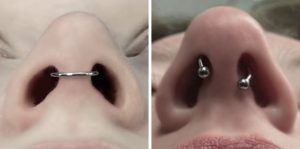
✅ 5. How you can tell the piercing was done correctly
-
The jewelry is not crooked
-
The soft tissue was pierced, not the cartilage
-
There is no excessive bleeding or pain
-
After healing, the jewelry can be flipped or changed if needed
How long does a septum piercing take to heal?
A septum piercing usually heals in 6 to 8 weeks, but for some people the whole process can take up to 3 months. Complications are rare.
Healing stages of a septum piercing
✅ 1. Inflammatory stage (days 1–7)
-
Immediate swelling, redness and mild pain
-
A clear or slightly yellowish fluid may appear (not pus!)
-
The body reacts to a “foreign object”, but it does not overreact – this is a natural response
? Tip: During this period, do not twist the jewelry, do not clean it aggressively and do not take it out.
✅ 2. Regeneration stage (weeks 2–4)
-
The swelling goes down and the wound closes
-
Discharge is minimal
-
Possible itching – a sign of regeneration
-
The tissue looks healed on the outside, but renewal is still going on inside
✅ 3. Stabilization stage (weeks 5–8 and beyond)
-
The piercing seems healed, but the inner channel is still “firming up”
-
The jewelry can be changed safely only after full healing – ideally after 8 weeks or more
? Note: Healing can take longer if the piercing is often irritated mechanically – for example by sleeping on your stomach, blowing your nose hard, or touching it often.
Common signs during healing
These symptoms are common and normal:
-
Slight watering of the eyes while cleaning
-
Dry crusts around the jewelry (never pull them off)
-
Tenderness when touched
-
Itching
When to pay attention: warning signs
See your piercer or a doctor if you notice:
-
A pus-like discharge (yellow, green, foul-smelling)
-
Intense pain that gets worse
-
A fever
-
A rash around the nose or swollen lymph nodes
How to care for a septum piercing
The right septum piercing aftercare is absolutely essential for trouble-free healing and for preventing infection. Even though the septum heals fairly quickly, that does not mean you can take the care lightly – quite the opposite. Following the right routine saves you discomfort, prolonged healing or even having to take the piercing out.
✅ 1. Clean it twice a day
-
Use saline solution (0.9% NaCl), or a mild salt solution (¼ teaspoon of sea salt in 250 ml of boiled water)
-
Soak a cotton swab or gauze and gently wipe around the piercing – never press or twist the jewelry
-
Avoid alcohol, hydrogen peroxide, ointments or iodine solutions – they dry and irritate the wound
✅ 2. Do not touch the piercing with dirty hands
-
Always wash your hands with soap before any handling
-
Avoid constantly checking it, playing with the ring or twisting it
✅ 3. Avoid chemical and mechanical irritation
-
Do not swim in pools, lakes or the bath (at least for the first 4–6 weeks)
-
Avoid kissing and oral activity around the nose
-
Do not use makeup or creams in the piercing area
-
Watch out for scarves, sweaters and towels – they can catch the jewelry
✅ 4. Sleep on your back
-
For the first weeks, ideally sleep on your back, not on your stomach or side – this avoids pressure and irritation
-
Change your pillowcase regularly
✅ 5. Do not take the jewelry out under any circumstances
-
If you take the piercing out too soon, the hole closes very quickly
-
Even if the piercing seems healed, it is recommended to leave the first jewelry in for at least 6–8 weeks
Types of septum piercing jewelry
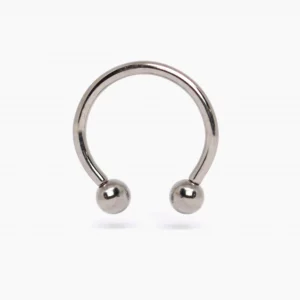
Basic types of septum piercing jewelry
✅ 1. Circular barbell (a horseshoe)
-
The most common choice right after the piercing
-
An open ring with a ball at each end
-
Easy to flip up inside the nose (practical for hiding the piercing)
? Advantage: a universal, comfortable piece, also suitable at the start
✅ 2. Captive bead ring (CBR) – a closed ring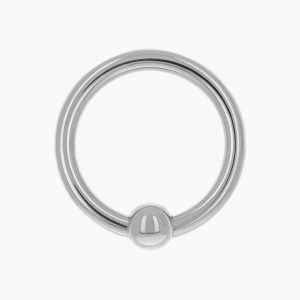
-
A ring with a bead that holds the jewelry together
-
An aesthetic, symmetrical look
-
Less suitable for an unhealed piercing (harder to clean)
✅ 3. Septum clicker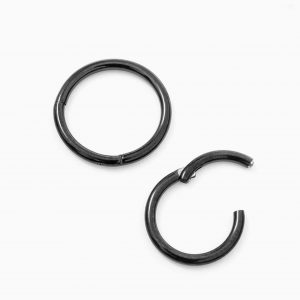
-
Jewelry with a mechanical closure – it “clicks” into place
-
It can have a decorative design: stones, ornaments, gold motifs
-
Ideal after healing, not at the start
? Tip: Clickers are an ideal choice for formal events or photos
Recommended jewelry materials
✅ Titanium (implant grade)
– The safest choice for the first piece
– Hypoallergenic, extremely durable and light
✅ Gold (14K and above, yellow or white)
– Attractive, but it should be high quality and free of nickel
– Only for a fully healed piercing
A septum piercing is more than a fashion accessory – it is an expression of personality, style and the courage to be yourself. If you are considering one, or you already have one, remember that the key to success is a quality piercing, careful hygiene and patience while it heals.
With the right care and the right jewelry, you can avoid unnecessary complications and enjoy a septum piercing fully – without pain, inflammation or scars. Insist on quality, trust an experienced piercer and do not be afraid to invest in hypoallergenic materials.
Whether you want a fine horseshoe, a minimalist retainer or a striking clicker, the balance between looks and health matters. A piercing should adorn you – not hurt.
? A final tip: If you are not sure what is best for your septum piercing, do not hesitate to ask an experienced piercer – it is an investment that comes back as calm, trouble-free healing.


